Smart Questions? Why?
10 Sep 2025Preface
Recently, I had to learn about the concept of “Smart Questions”, an idea presented by Eric Raymond. This essay written by him can be suumarized as following:
There Are No Stupid Questions
I’m in the camp that thinks there are no stupid questions. I see and somewhat agree with Eric Raymond’s idea of a smart question, but his presentation style makes me want to ask questions that may be deemed “stupid”. For one to talk a lot about communication, his presentation style seems off-putting and unprofessional at best.
His display of how the average “hacker” may respond to a “stupid” question does not resonate with the personal experiences I’ve had with my computer science peers from when I started in High School. “While muttering RTFM is sometimes justified when replying to someone who is just a lazy slob, a pointer to documentation (even if it’s just a suggestion to google for a key phrase) is better.” - Eric Raymond, on the topic of how to be helpful when answering questions. This not only paints a negative view towards new learners, but also shows Eric’s biases towards them, making me hesitant to take home what I’ve learned from his writing. I personally would not view new learners as a “lazy slob”, and they are at least putting the effort to learn more by asking questions in the first place.
Smart Question In Action
I decided to try to find a smart question in action by looking up forum questions on Stack Overflow, a website where software development-related problems were asked and hopefully answered. I personally feel that the website itself is a great example of the smart question line of thinking. People are encouraged to ask questions in a way that acts as a reference point in case the same problem is encountered again in the future. By this, if the same exact question is asked 10 years later, they will most likely have their question removed and the poster will be redirected to the issue that was resolved 10 years prior. Good in most cases, but bad for issues that are ever so slightly different than a past question (either due to version changes in said software/language or the same error but caused for a different reason).
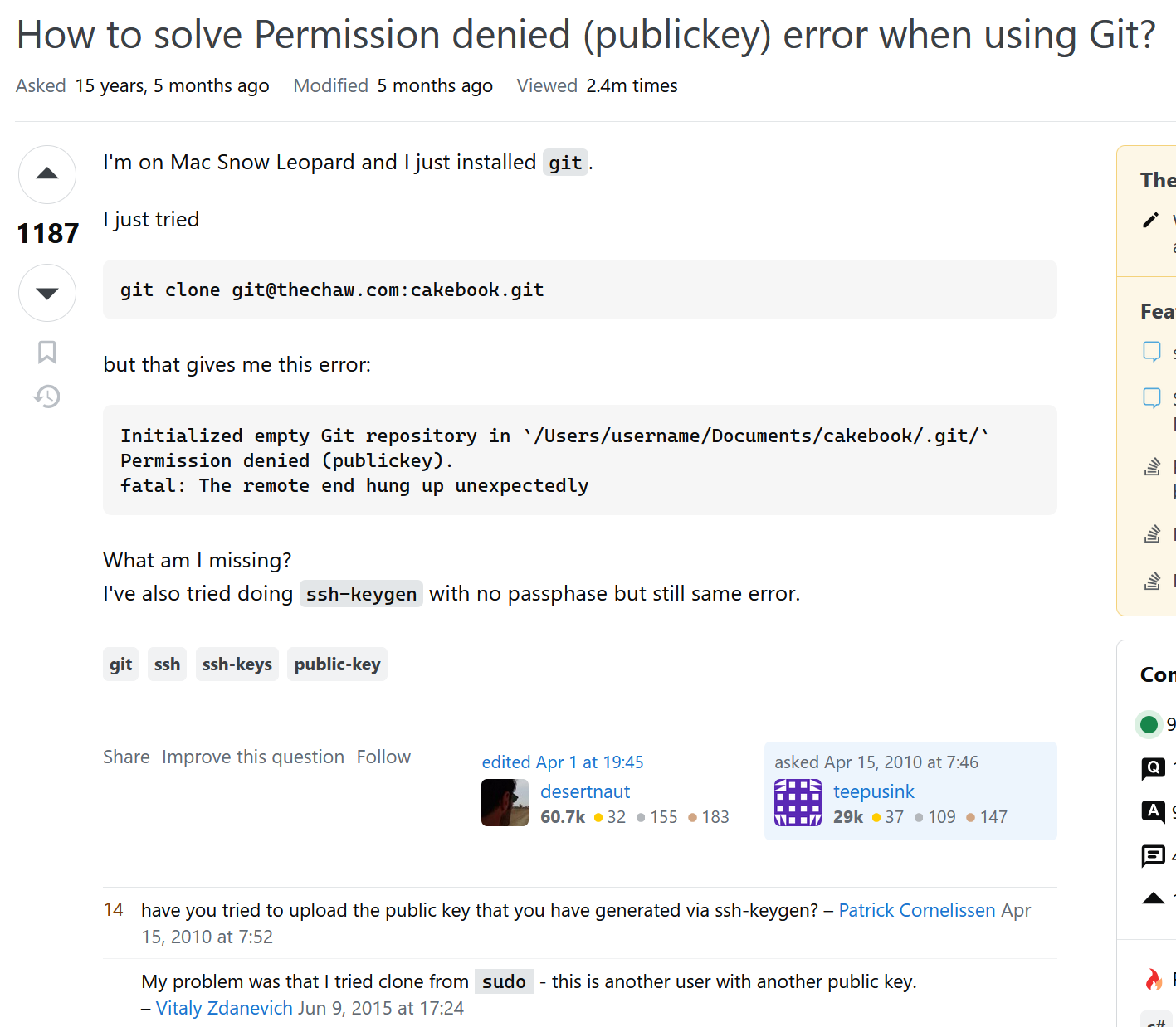 The image shown is an example of a good question. His subject header contains the error message and the platform he is on, which is as meaningful and specific as the poster could be. In the body, the poster’s english is clear as day and grammatically correct, eliminating any error for miscommunication. There is even a screenshot provided, allowing users to see first-hand what the computer says, which can sometimes be hard to communicate/format with just text. Overall, the question gets straight to the point, and immediately gets answered within the hour it was asked.
How To Not Phrase a Smart Question
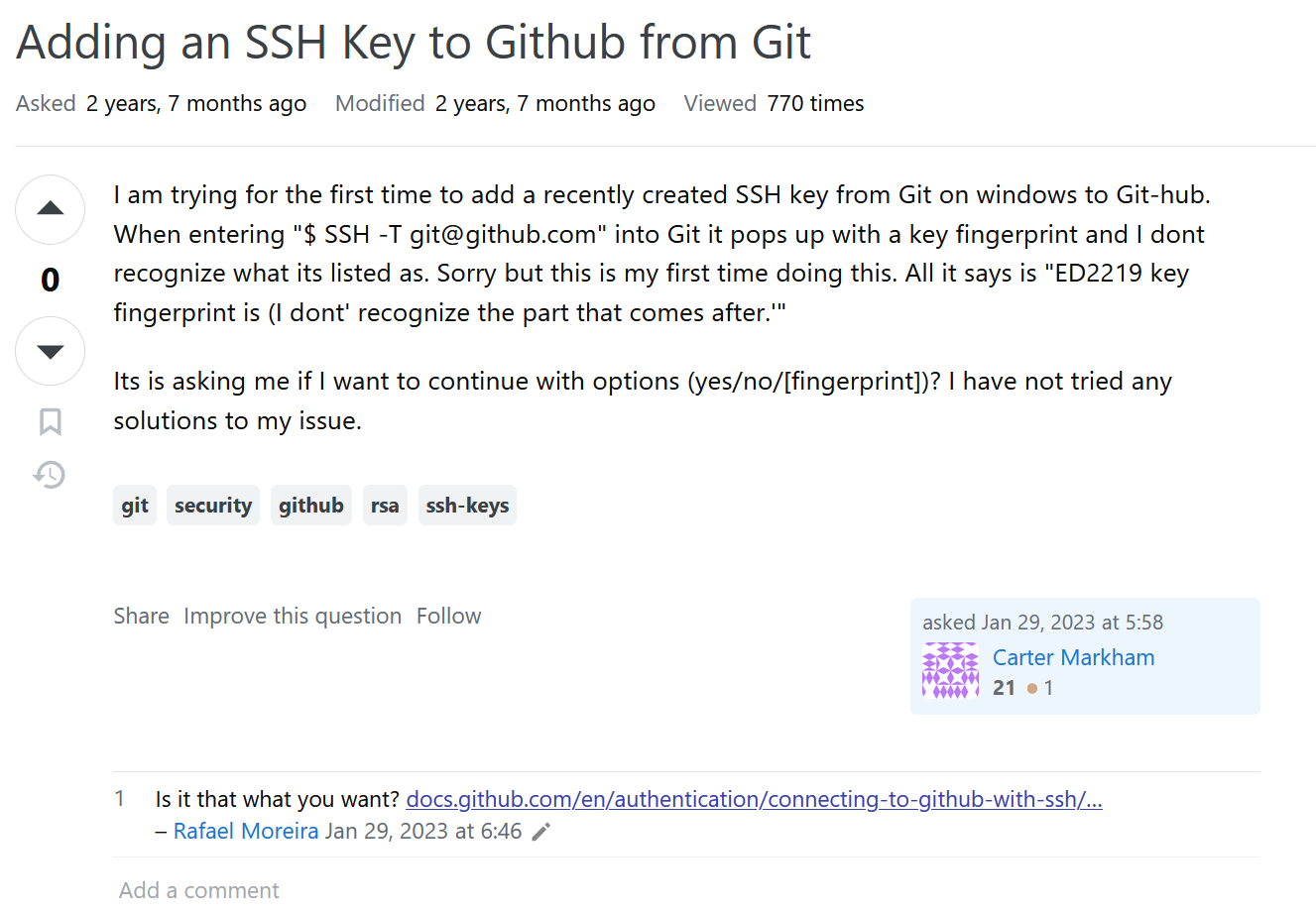 This guy’s question does not help his case of receiving help. He has mentioned not trying any solutions. One option he could have tried was first trying the solutions. Him stating that he has not tried them yet gives less incentive for other people to help since their help might not even be considered. One of the replies also easily found a possible solution, indicating that the solution was easily found and that the asker put no effort into solving their own solution.